
Enjoy this blog post? Sign up for our newsletter and enjoy similar free content.
Digital Transformation:
Using Data to Make a Difference
By Michael Ip MSocSc, RSW, Non-profit Strategist
It was a recent story from a non-profit community service center. The team in charge of education programs for married couples noticed that the program participants were mostly middle-aged couples and wanted to extend their reach to younger couples. They landed on Instagram as the main promotional channel to use. They thought this made perfect sense since Instagram users are typically younger.
Now, this is where it gets interesting. For the past few years, the teams have been using online forms for program enrollment, which means they have gathered a ton of user data in digital format. I spent some time sorting out the data and ran a simple Excel calculation to see if I could learn anything. What I found was surprising. The team serving parents, in fact, had previously reached out to several younger couples. My question was, why did they not then attend the programs? I raised this question to the two teams and together we came up with a conclusion that young couples with kids, who joined the parenting programs, were full-time mothers who could attend during the day while their kids were in school. However, they could not attend the marriage enrichment program with their spouses at night as they had no childcare resources to relieve them. The discussion shed light on the issue for the team and shifted their mindset. The promotional effort could reach out to young couples with kids, but they would not be able to attend the couple's program anyway. They needed to redefine their target audience for the couple's programs to people who were married without kids or those with access to childcare support. For those unable to afford childcare service, the team may have to work out alternatives for them to include them.
This story is not just about rethinking our target audience. It is about three important concepts of organizational change: digitization, digitalization, and digital transformation.
Digitization means converting our data into digital format.
Digitalization refers to using digital tools and platforms to make our operation more efficient.
As the team in my story above previously adopted online registration; they had already received users' profile in digital format. Then they could more easily use the data for the digital process of program registration and follow-up communication.
Digitalization enhances our filing systems and makes our work more efficient as users' data can be stored and retrieved in a breeze. However, that data remains underutilized until we dive in and use it to gain a better understanding of our work. We still rely on our personal impressions and assumptions until we take advantage of the data for a holistic profile.
Lacking a deeper understanding of their users through the data, the team had jumped to a premature conclusion deciding quickly to shift their resources to a new strategy.
Digital transformation can help organizations gain a better understanding of their users and adapt their programs to better serve their needs. Digital transformation is a mindset change in which we intentionally make use of data analysis as a significant input in ourdecision-making, strategic planning, and monitoring. Digital data is not only for making our filing system more efficient. It should be used to provide insight into our target communities, and the process and outcomes of their engagement journey.
By utilizing data analysis and adopting a digital mindset, we can make better decisions and provide more effective services to the non-profit communities we serve.
Find our free downloadable resources

Workplace Accommodations for Youth with Disabilities
This resource provides practical guidance for employers on supporting youth with disabilities through workplace accommodations. It explains the importance of understanding, trust, and open communication in creating inclusive workplaces, while also addressing common misconceptions about accommodations and highlighting useful resources for employers who want to build more accessible and supportive work environments.

Unilateral NDA Template
Sharing sensitive organizational information is often a necessary part of discussing a merger, amalgamation, or other form of collaboration. This template provides a starting point for establishing confidentiality when one organization is disclosing information to another during preliminary discussions.

Discussion Worksheets for Deeper Forms of Collaboration
Exploring a merger, amalgamation, or other deeper form of collaboration requires thoughtful planning, honest reflection, and meaningful dialogue. These worksheets can help guide organizations through each stage of the process.
Find our free downloadable resources

RFP: Name and Brand Identity Review for Vantage Point
Vantage Point is seeking an external strategic communications / branding partner to help us think through our name
and brand identity, informed directly by the people and organizations we serve.
Vantage Point in the News
Vantage Point was featured in the Vancouver Guardian.
The Vancouver Guardian asked us about how we’re supporting non-profits across BC and our mission to strengthen BC’s non-profit sector through leadership, development, governance, organizational capacity building and more.
Join Vantage Point for this Year’s BC Non-Profit Network: Northwest BC Leadership Gathering
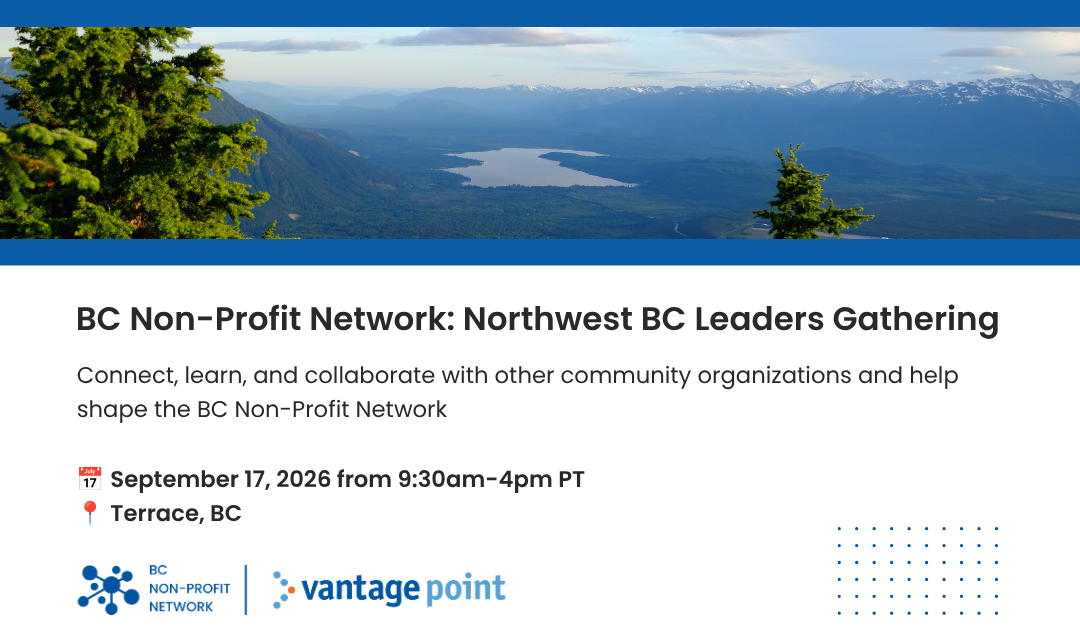
Join Vantage Point on September 17 in Terrace for the BC Non-Profit Network: Northwest BC Leaders Gathering. Deepen relationships, learn about what is happening in BC’s non-profit sector, participate in practical learning, and contribute to the next stages of growth for the BC Non-Profit Network (BCNN).