
Enjoy this blog post? Sign up for our newsletter and enjoy similar free content.
Why We Volunteer: A Journey of Learning and Giving Back
By Alina Emery, Volunteer Engagement Coordinator
Ask someone why they volunteer, and you will uncover a deep and vast collection of stories.
My mother was born and raised in the Dominican Republic. Her upbringing, and the lessons she shared with my siblings and I, centered around respecting the land we are on and the people around us. Holding a growth mindset focused on learning from others, especially our elders, is an important part of our culture and strongly benefits our livelihoods. In a very reciprocal fashion, my elders taught me that they are always learning from me and the other younger people in their lives, and that those interactions deepen their experiences. Learning is a cycle of appreciation and growth towards strengthening our roots as a community. Giving back, helping others, and developing strong relationships and action within our communities, enhances our well-being. Volunteering has always been encouraged as a meaningful way to learn, grow and offer mutual support to the communities that supported us.
Now, as a second-generation immigrant and settler on the lands of the xʷməθkʷəy̓əm (Musqueam), Skwxwú7mesh (Squamish), and Səl̓ílwətaʔ (Tsleil-Waututh) peoples, I strive to live out those values, support those generational cultural messages and values in my work.
There are many lessons we can learn from, not only our own cultures, but the many diverse perspectives present in our communities.
I recently attended Future of Good’s 2-day virtual Wellbeing Summit focused on the well-being of the non-profit sector and the people serving in it. Through a session on “What Wellbeing is Missing: Indigenous Peoples and Perspectives” we explored teachings that can be adopted from Indigenous practices, celebrations, and languages and incorporated in the protocols and practices of non-profit organization. These included examples like developing smudging policies, supporting employees to take time off for learning about Indigenous ceremonies or languages, or including action statements as a part of offering a meaningful land acknowledgement.
The Seventh Generation Principle and the Two-Eyed Seeing Approach stood out to me as I considered ways Indigenous culture and my work with volunteers might intersect. The Seventh-Generation principle holds the perspective that in any decision we make there is importance and value in considering how it will affect the next seven generations. The Two-Eyed Seeing (Etuaptmumk in Mi'kmaw) Approach, developed by Mi’kmaq Elder Albert Marshall, shares the opportunity for integration of both Indigenous and Western ways of knowing, teaching and learning in our lives and in our work.
In our own cultures, life lessons and relationships, and in both the Two-Eyed Seeing Approach and the Seventh-Generation Principles of the Indigenous peoples, we find messages of the meaning and value of intergenerational and intercultural solutions, and how, when incorporated into our lives and our work, they are opportunities to deepen the impacts. This holds true for volunteerism - for both volunteers and communities they serve.
As many know, the pandemic shifted the generational dynamic significantly in the volunteer and non-profit sector. More mature volunteers started prioritizing their health and families and stepped back from volunteering. High schools paused volunteerism credits toward graduation to ensure students were safer. Non-profits came to a halt with their programming, decreasing the need for volunteers and, as we know, picking up traction can be challenging. Through this pause isolation and loneliness increased. It’s my belief that volunteering with groups of people from all generations, cultures and beliefs supports our well-being, our happiness, and our sense of belonging in community. We can find opportunities to grow as individuals, to develop relationships that we may not have otherwise with people from a different background or generation than us, who can have transformational impact on our lives, and find meaning purpose through service in community.
Our organizational model at Vantage Point often partners Knowledge Philanthropist facilitators who have been in the sector for many years with Digital Hosts team members, who are often youth and younger individuals wanting to learn more about the non-profit sector. I have witnessed some beautiful interactions watching long-term facilitators exchange knowledge and tips with our digital hosts around careers, resources and skill enhancement. These intergenerational collaborations can benefit from each other's experiences, working together on a mutual project, is one of the reasons I love what I do. Volunteer programs that offer a safe and engaging space for volunteers can initiate long-term impacts that benefit generations to come.
This National Volunteer Week, my hope is that organizations can take the time to think about how volunteerism exists currently in their organization and what "Two-Eyed Seeing Approach” they can take that will improve the well-being of volunteers and serve seven generations into the future. Expanding our approaches to bring learnings from other cultures and communities has a reciprocal effect, not only strengthening organizations but improving the growth and success of volunteers engaged.
There is much more I could share about the intersectional aspects of volunteerism and the value of creating spaces for intergenerational learning and growth for volunteers. If you’re curious to dive deeper into all things volunteerism with me, please feel free to connect on LinkedIn or at aemery@thevantagepoint.ca
*“What Wellbeing is Missing: Indigenous Peoples and Perspectives” session was led by Shannon VanRaes (Future of Good), Talitha Tolles (MakeWay), Michael Redhead Champagne, and Alexandra Biron (Deloitte)
Find our free downloadable resources

Workplace Accommodations for Youth with Disabilities
This resource provides practical guidance for employers on supporting youth with disabilities through workplace accommodations. It explains the importance of understanding, trust, and open communication in creating inclusive workplaces, while also addressing common misconceptions about accommodations and highlighting useful resources for employers who want to build more accessible and supportive work environments.

Unilateral NDA Template
Sharing sensitive organizational information is often a necessary part of discussing a merger, amalgamation, or other form of collaboration. This template provides a starting point for establishing confidentiality when one organization is disclosing information to another during preliminary discussions.

Discussion Worksheets for Deeper Forms of Collaboration
Exploring a merger, amalgamation, or other deeper form of collaboration requires thoughtful planning, honest reflection, and meaningful dialogue. These worksheets can help guide organizations through each stage of the process.
Find our free downloadable resources

RFP: Name and Brand Identity Review for Vantage Point
Vantage Point is seeking an external strategic communications / branding partner to help us think through our name
and brand identity, informed directly by the people and organizations we serve.
Vantage Point in the News
Vantage Point was featured in the Vancouver Guardian.
The Vancouver Guardian asked us about how we’re supporting non-profits across BC and our mission to strengthen BC’s non-profit sector through leadership, development, governance, organizational capacity building and more.
Join Vantage Point for this Year’s BC Non-Profit Network: Northwest BC Leadership Gathering
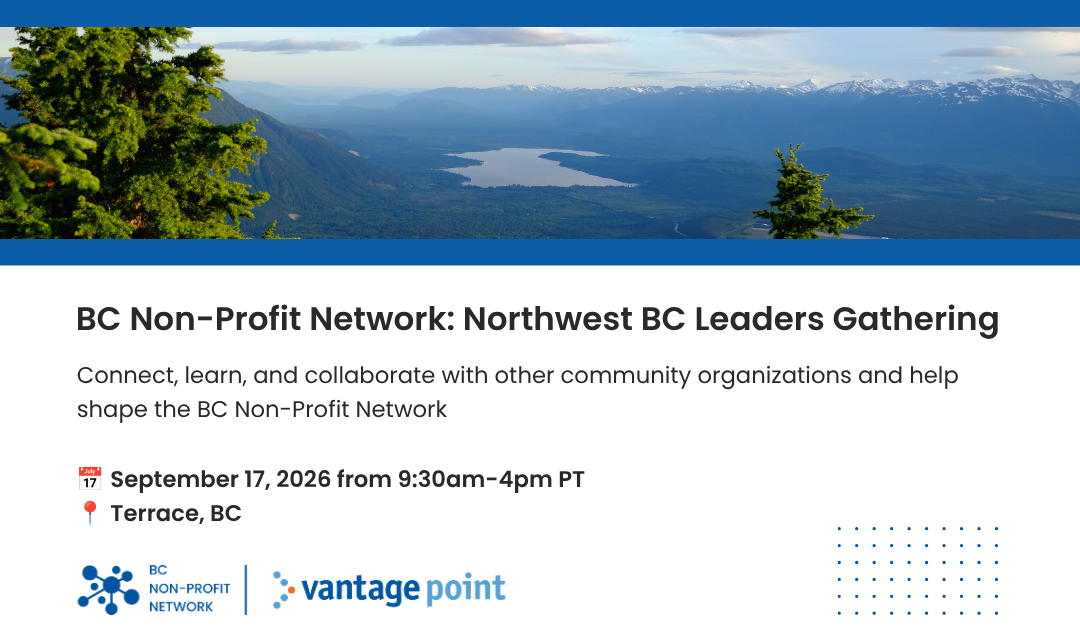
Join Vantage Point on September 17 in Terrace for the BC Non-Profit Network: Northwest BC Leaders Gathering. Deepen relationships, learn about what is happening in BC’s non-profit sector, participate in practical learning, and contribute to the next stages of growth for the BC Non-Profit Network (BCNN).