@thevantagepoint
BUILD: Stronger BIPOC-Led Non-Profits across BC and the Yukon

BUILD: Stronger BIPOC-Led Non-Profits across BC and the Yukon

Enjoy this blog post? Sign up for our newsletter and enjoy similar free content.

Oct 28, 2025

BUILD: Stronger BIPOC-Led Non-Profits across BC and the Yukon

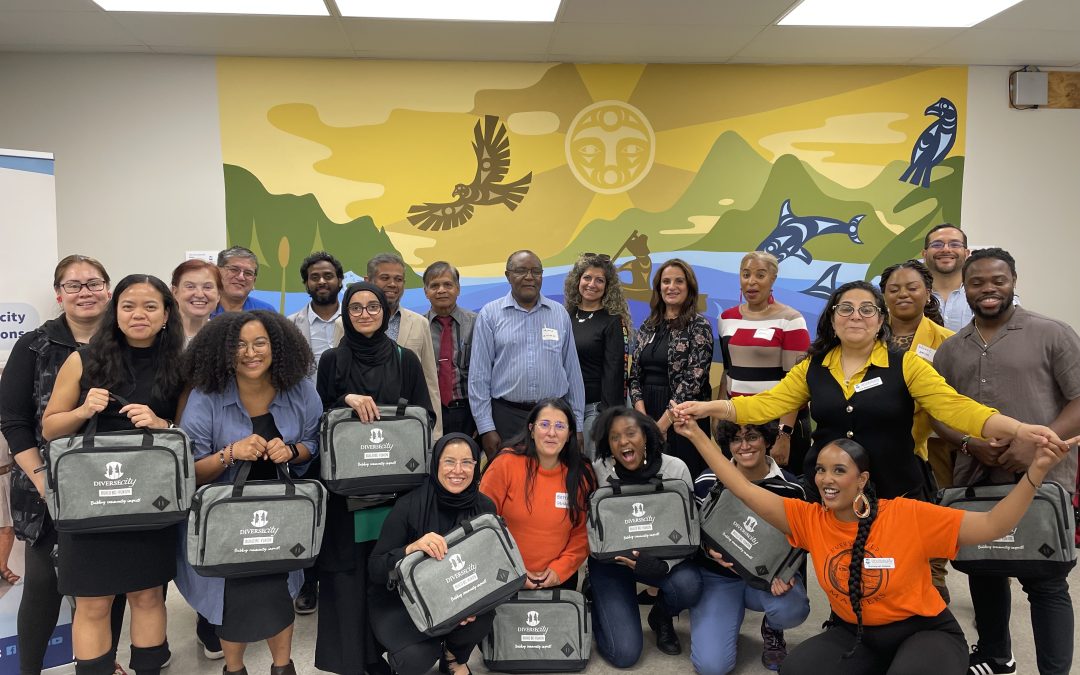
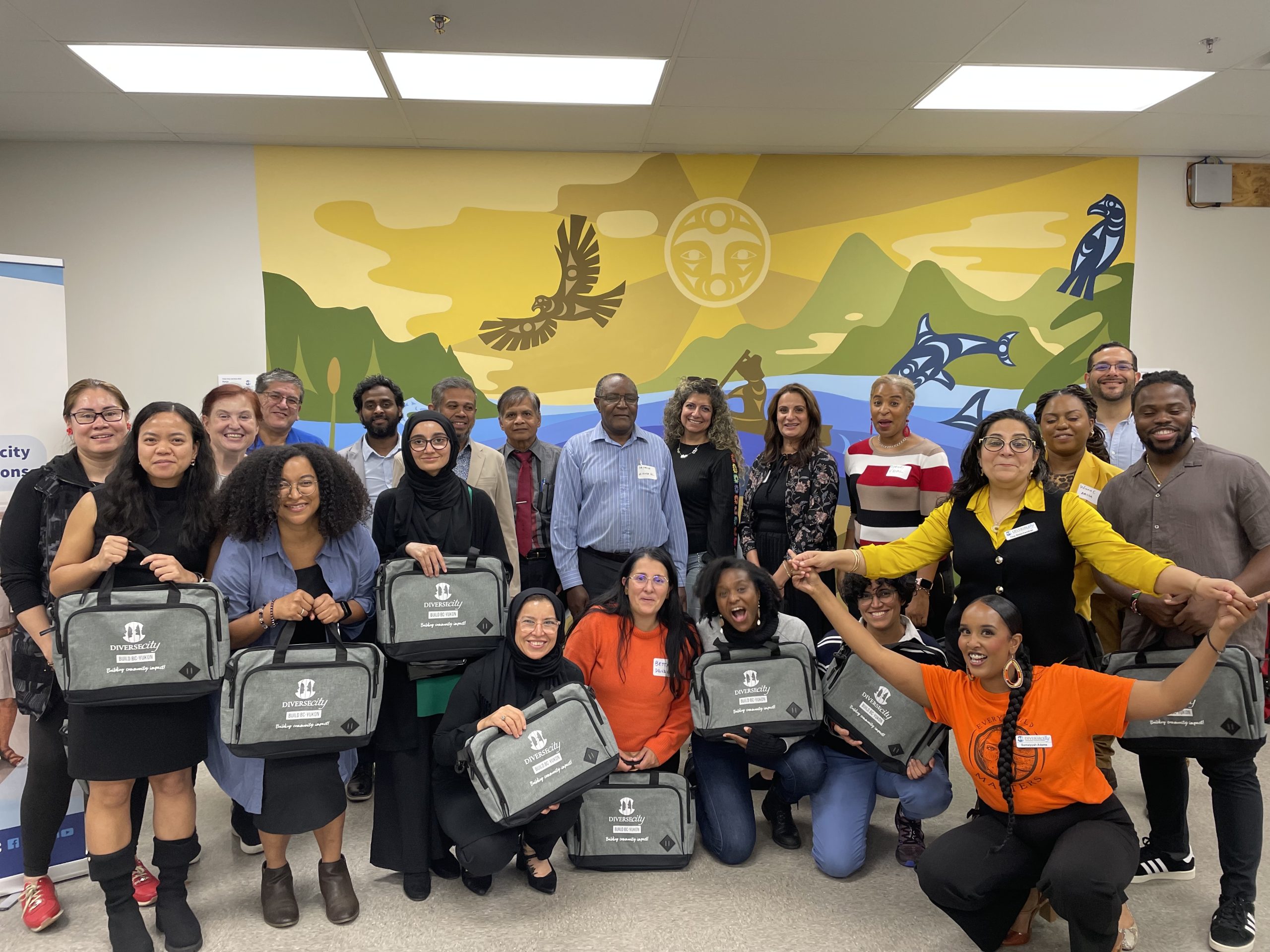
Bring together dozens of BIPOC-led grassroots organizations from across BC and the Yukon, each one driving change in their communities against the odds, and you’ll witness something powerful: a room alive with vision, courage, and ideas that can reshape the future. 

We have been honoured to join DIVERSECity, AMSSA, and an incredible group of these organizations for the official launch of the BUILD (BIPOC Unified Inclusive Leadership Development) Program. This three-year initiative is designed to amplify the vital work these organizations are doing while addressing the structural barriers they face in areas such as funding, system navigation, and sustainability. The event marked the first time participants and service providers came together, opening a space to connect, share stories, and imagine what is possible when we put together our collective strengths. 

Indigenous Elder Stephen (Xem-Tu-Mus) Armstrong from Kwikwetlem First Nation shared the Hul’q’umin’um teaching of Naut’sa Mawt: Working Together as One. He reminded us that the heart of BUILD is about walking forward with one mind and one heart, rooted in collaboration, mutual respect, and the collective wisdom each organization carries. 

Participants highlighted both challenges and hopes.  

They spoke about systemic funding barriers, even when both their reach and impact are undeniable. 

They talked about on the exhausting work of operating without core staff support; and the need for resources that reflect the realities of immigrant and newcomer communities.  

Yet, they also emphasized a deep commitment to partnership:  

“We don’t need to do everything ourselves, and we don’t want to.”  

Many voiced their excitement about joining forces with each other, with companies, and with governments, to expand their reach and deepen their impact. 

The work these organizations are leading is extraordinary: creating culturally safe spaces for families of children with disabilities, guiding newcomers through Canadian systems in decolonized ways, offering food security for African diaspora communities, supporting immigrant and refugee youth in the North to connect and thrive, bringing BIPOC women together to build solidarity, and so much more. Their impact spans emotional, spiritual, and physical well-being, addressing needs that are too often overlooked elsewhere. 

We are proud to have been asked to work with DIVERSECity in delivering this program. Our role is to provide high-quality, practical training in governance, leadership, fund development, and organizational capacity—areas that strengthen and sustain organizations. 

With one mind and one heart, rooted in collaboration, mutual respect, and the collective wisdom each organization brings to the table, our goal is to “build” on the knowledge, connections, and strengths already within these communities—so their impact continues to grow and thrive, creating the brightest future for those they serve. 

 --

BUILD Cohort: Mainland Community Services, OCCA Communities Association, Beyond Borders Youth Network, BIPOC Women’s Society, Kingdom Acts Foundation, Great Zimbabwe Cultural Society of BC and Yukon, ACT by Vidal, Khaliyl’s Kids Family Care Foundation, Rise Above Reality Expectations, Senses and Me, International Refugees Support Foundation, BC Bereavement Helpline, Parents Against Racism Alliance, Community Development Society of Canada, Griottes Polyglottes 

Find our free downloadable resources

Find our free downloadable resources

Unlocking the Potential of Your Board: The Value of eLearnings for Board Fundamentals

Unlocking the Potential of Your Board: The Value of eLearnings for Board Fundamentals

Enjoy this blog post? Sign up for our newsletter and enjoy similar free content.

Mar 4, 2025

Unlocking the Potential of Your Board: The Value of eLearnings for Board Fundamentals

By Vantage Point 

Imagine you’re about to join a new board. You’re new to the role and the organization. You’re excited for the opportunity but feeling completely overwhelmed by the responsibilities.  

You're not alone—many new board members face this challenge. But what if there was a way to quickly get up to speed and make a meaningful impact from day one? 

Or maybe your board is feeling out of alignment or unclear on their role with the organization’s work. Your non-profit is suffering lack of direction because responsibilities and guiding practices are unclear. How could you get the team all on the same page in a quick, self-paced format that would provide them the essentials for their success as directors? 

In today's fast-paced world, effective governance is more crucial than ever for non-profit organizations. Understanding the roles and responsibilities of a board of directors can make a significant difference in how an organization operates and achieves its mission. With limited time, resources, and team members joining from various locations, flexible and virtual trainings are more and more necessary. 

That's where our Board Fundamentals: Roles and Responsibilities eLearning course comes in. 

Why Choose eLearning

Our eLearning course offers a flexible, self-paced learning experience that fits into the busy schedules of board members. Whether you're new to a board or looking to refresh your knowledge, this course provides a comprehensive introduction to the essentials of board governance.

Understand Your Role: Learn the specific duties and responsibilities of a board member, helping you to contribute effectively from day one.

Improve Board Meetings: Discover tools and practices, such as consent agendas and board calendars, that streamline meetings and make them more productive.

Build a Stronger Board: Gain insights into self-management practices that promote a cohesive and effective board, ultimately leading to better decision-making and organizational success.

For seasoned board members, the course offers a chance to revisit foundational concepts and stay updated on best practices. This continuous learning approach ensures that the board remains dynamic and capable of navigating the complexities of governance.

Key Benefits

Accessibility and Convenience: Available online, this course allows you to learn at your own pace, anytime and anywhere. No need to coordinate schedules or travel to a workshop.

Comprehensive Content: The course covers critical topics such as the five governance responsibilities, board self-management, and practices that build effective boards. This ensures that you gain a well-rounded understanding of what it means to be a board member.

Interactive Learning: With a mix of videos, transcripts, text, additional resources, and reflection questions, the course is designed to engage different learning styles. Participants are encouraged to take notes and discuss their learnings with other board members, fostering a collaborative learning environment.

Group Learning Options

Our eLearning course isn't just for individuals. We offer group pricing and custom training sessions to support entire boards. This approach ensures that all members are on the same page, fostering a unified vision and strategy for the organization.

    Get Started Today

    Investing in board education is investing in the future of your organization. Our Board Fundamentals: Roles and Responsibilities eLearning course is an invaluable resource for anyone looking to enhance their governance skills and contribute to their organization's success.

    By providing a flexible, comprehensive, and engaging learning experience, our eLearning course empowers board members to excel in their roles and drive their organizations forward. Don't miss out on this opportunity to strengthen your board and, ultimately, your organization.

    Ready to take the next step? Register today and unlock the full potential of your board!

    Use the discount VPTHINK15 to receive 15% off before August 31, 2025!

    Find our free downloadable resources

    Find our free downloadable resources

    Elevating Non-Profit Leadership: The Impact of Vantage Point’s Bursary Programs

    Elevating Non-Profit Leadership: The Impact of Vantage Point’s Bursary Programs

    Enjoy this blog post? Sign up for our newsletter and enjoy similar free content.

    Mar 3, 2025

    Elevating Non-Profit Leadership: The Impact of Vantage Point's Bursary Programs

    By Vantage Point 

    Non-profits play a vital role in our communities, offering essential services and support to those in need. However, these organizations often face significant challenges, especially when it comes to leadership stability. According to Vantage Point’s 2024 State of BC’s Non-Profit Sector Survey, nearly half of the respondents reported increasing resources spent on staff recruitment and retention. Key challenges include board recruitment, board retention, and succession planning.

    The Need for Strong Leadership

    Strong leadership is crucial for the sustainability and success of non-profits. Clear roles and responsibilities, effective succession and recruitment practices, inclusive board cultures, and strong financial governance are essential. Addressing these challenges ensures continuity and effectiveness in non-profit leadership, which in turn supports the broader community.

    To tackle these challenges, Vantage Point offers Bursary Programs that provide flexible access to essential educational offerings and customized support for non-profit boards and key leaders.

    Thanks to partnerships, like those we currently hold with the City of Vancouver, City of New Westminster, and Vancouver Coastal Health, these programs benefit organizations across British Columbia.

    Bursary Programs allow even the smallest and most financially challenged non-profits to access valuable resources and support.

    Through bursary support, South Vancouver Family Place was able to access support for strategic planning. Executive Director Kimberley Berger shared, “The Vantage Point Strategic Planning session was very well organized, thorough and presented in a manner that both staff and board could easily understand. Being a new ED, it helped provide clarity and vision for me to move forward with the Board and Staff. This was less daunting than we expected. We are super energized and happy to have been able to participate.”

    Aliya Amarshi, Managing Director at Carousel Theatre for Young People added, “[With bursary funding received,] Vantage Point provided us an opportunity to have open discussions and make strategic decisions. We now have the structure in place to effectively grow. We have tools to draw from to continue actualizing our plan. It’s early days yet, but we are confidently making sometimes difficult decisions to realize our mission".

    Join us in supporting BC’s non-profit leaders! Your financial contribution will help build a stronger sector and create a lasting impact.

    Vantage Point's Bursary Programs

    How It Works 

    • Annual Fund: Funders or capacity builders provide Vantage Point with an annual fund (ranging from $5K to $50K) to support eligible non-profits.
    • Eligibility and Administration: The funder determines eligibility, and Vantage Point administers the fund. Non-profits can then register for programs or services, with fees covered by the bursary fund.
    • Approval Process: Funders can choose a high-touch approach (requiring approval before registration) or a low-touch approach (pre-approved list of eligible organizations and services).

    Impact and Reach

    The impact of Vantage Point's Bursary Program is significant:

    • $5,000 Investment: 5-10 organizations served through 9 engagements (workshops and labs).
    • $10,000 Investment: 40 organizations served through 50-60 engagements (workshops).
    • $50,000 Investment: 50+ organizations served through 80-90 engagements (workshops, labs, and consulting).

    Services and Costs

    Vantage Point offers a range of services to meet the diverse needs of non-profits:

    • Workshops and Multi-Day Labs: Pre-scheduled virtual or in-person sessions open to all ($139/workshop – $599-$2999/lab).
    • Standard Training: Facilitated workshops for specific organizations or groups (from $900).
    • Custom Training: Tailored programs for boards or staff teams (from $1200).
    • Facilitation: Strategic and planning facilitation (from $1200).
    • Consulting Services: Organizational assessment, lifecycle and capacity planning, ED transition supports, governance restructuring (fee based on project scope).
    • Membership: Access to discounts and sector development initiatives (1-year organizational membership $100).

    Partner with Us

    We invite funders and capacity builders to partner with Vantage Point to support non-profits in BC. By establishing a bursary fund, you can empower organizations to overcome capacity challenges and thrive in their missions. Together, we can ensure that non-profits have the knowledge, resources, and support they need to lead effectively and sustainably.

    For more information or to discuss partnership opportunities, please contact us. We look forward to working together to strengthen the non-profit sector and create lasting impact in our communities.

    Find our free downloadable resources

    Find our free downloadable resources

    Mirroring Community on Boards: How to Create Diverse Boards

    Mirroring Community on Boards: How to Create Diverse Boards

    Enjoy this blog post? Sign up for our newsletter and enjoy similar free content.

    Aug 30, 2023

    Mirroring Community on Boards: How to Create Diverse Boards

    Non-profit governance structures, like many other Canadian structures of power and authority, fail in diversity. This can be an uncomfortable and unsettling fact to accept; one that we must handle with care. The reality is that many marginalized groups have been historically excluded from decision-making, even when an organization is dedicated to their causes. Here’s a little exercise for you:

    1. Choose a Canadian non-profit organization and open their website.
    2. Find and click on the ‘Board of Directors’ page.
    3. Reflect on the following question: How many board members appear to be or are described to be under the age of 30, Indigenous, Black, a person of colour, transgender, queer, and/or living with a disability?

    People from equity-deserving groups bring a diversity of thought to the boardroom. Their diverse lived experiences provide an incredible source of new ideas and perspectives that enable an organization to provide more comprehensive support to their community members, innovate with new solutions, and remain relevant for achieving their vision. Despite these benefits, people from equity-deserving groups often experience tokenism when serving on boards. Tokenism means that people from diverse background are asked to represent their group, embodying only one of their many social roles. In this role, a person may make assumptions about what others from their group would need or may only be present without an actual say in the decision-making process. For example, a person with disability might be asked to always embody disability and represent voices of people with disabilities, while their professional expertise may be disregarded. For meaningful participation, people need to feel like they genuinely belong and not exist as tokens, which makes a culture of inclusion an imperative on any board.

    Having this in our mind, Vantage Point set a goal to improve the position of equity-deserving groups in non-profit governance. We began this project with the support of Vancouver Coastal Health (Health Promotion Community Investments) and the City of Vancouver (Social Policy Division) with the aim to develop a series of workshops that would support both members from equity-deserving groups and current non-profit board members. We are trying to empower participants from communities or groups, who are under-represented on boards, to seek better conditions and use their agency to join non-profit boards. We are inviting them to be part of a community that is starting at a foundational level without judgment. We are also building new educational workshops to support current board members, to help them understand how the non-profit sector in Canada perpetuates existing colonial structures and practices and in what ways they can contribute to a collective unlearning process and systemic change.

    As new board members from equity-deserving groups and current board members, mostly from culturally dominant groups, come to this process with different perspectives, our goal was to create a shared understanding of what is expected and/or needed from both sides. We approached this task with a mirroring methodology, maintaining a similar set of topics but reflecting the different starting position of each group. We approached the development of the workshops with the philosophical stance “nothing about us, without us,” inviting current and new Knowledge Philanthropists to assist us in this process and share their lived experiences both as people coming from equity-deserving groups and as board members.

    What is mirroring?

    The idea of mirroring blossomed for us when we began to see how important it is to create a reciprocal relationship between those who want to join boards and those who are current board members. There is a two-sided nature to it; they both feed each other.

    When a member of public or an outsider to a board joins that board, they are faced with challenges of an unknown board culture. They must uncover the expectations and assumptions that an existing board culture has about their own practices, which can take months or even years. In many cases, people joining boards already have previous experience with non-profit governance. This means that while the system itself is familiar, it is the organizational culture that will take some time to understand.

    When someone is entirely new to a board role and has diverse lived experience, their inclusion may require a higher level of support. It is important to create a shared understandings on both sides. The two mirroring workshops that we developed support new board members on one side, and established boards on the other.

    Volunteering on Non-profit Boards

    Organizations, such as MOSAIC and For a Network for Change, identified a gap in support for newcomers to Canada to learn about non-profit boards and governance, and received overwhelming response. With an opportunity to contribute to diversification of non-profit governance, Vantage Point has developed a three-hour workshop that helps beginners learn what board governance is, what type of commitment is required from them, how it benefits the community, and what they can expect in terms of practices, procedures, and responsibilities they can expect. The workshop is open to those who identify as one or more of the following: youth (aged 18-35), Indigenous, Black, person of colour, person with disability, 2SLGBTQIA+, and newcomers to Canada.

    Board Diversity and Inclusion series

    Next came the work to review and reflect on our workshops for existing board members. The question we asked ourselves was this: ‘What conversations are missing among board members that can address systemic exclusion?’ We issued a call to our volunteer base of Knowledge Philanthropists, who responded with expressions of interests to contribute to this task. The contributors to this work all had diverse lived experiences with unique intersectional positions and board experience. It was clear that the topic of board diversity and inclusion would require a variety of spaces and themes depending on how comfortable and familiar a participant feels in this area, so we are working towards a four-part series of workshops, each of which can be taken individually or as a set. They are:

    • Introduction to Key Concepts
    • Deepening Foundations and Embedding Actions
    • Inclusive practices for people living with a disability or chronic illness [in development]
    • [Draft title] Decolonizing practices and navigating power dynamics [in development]

    ***

    The Vantage Point Board Diversity & Inclusion series of workshops supports people from traditionally represented groups on the board to change their mindsets and make space for other voices to be heard. While our Volunteering on Non-profit Boards workshop empowers equity-deserving community members to seek their place on a board and understand the perspectives of current board members. Both groups have a lot of learning to do. Systemic change is slow and comprehensive. While we may not see change occur overnight, we believe that we can begin to uncover new truths and learnings that can transform non-profit boards into a new kind of space.

    Sources: 

    Find our free downloadable resources

    Find our free downloadable resources

    CHANGE MANAGEMENT: So what is it, really?

    CHANGE MANAGEMENT: So what is it, really?

    Enjoy this blog post? Sign up for our newsletter and enjoy similar free content.

    Aug 28, 2023

    CHANGE MANAGEMENT: So what is it, really?

    By Grace McKeown, Vantage Point Knowledge Philanthropist

    I have been a Knowledge Philanthropist with Vantage Point for a few years now and have provided change management workshops to a number of not for profit organizations. Most participants attend these workshops as they are keen to learn more about how to implement successful change in their organizations. Often the “aha moment” happens when we discuss how people respond to change. Just because a change may be perceived as positive for an organization, people may still react negatively because of how the change personally impacts them and their day to day routines. Once leaders understand how individuals will respond to a change then they are better able to proactively manage the change and increase the likelihood of a successful implementation. The art and science of understanding and responding to the people side of change is where change management professionals are invaluable.

    The term change management has become an increasingly common phrase in businesses and projects today. We hear leaders say, “we need change management” or see job postings for “change management” but really, what is change management?

    The Association for Change Management Professionals (ACMP) defines Change Management as “the application of knowledge, skills, abilities, methodologies, processes, tools, and techniques to transition an individual or group from current state to a future state to achieve expected benefits and organizational objectives. Change management processes, when properly applied, ensure individuals within an organization efficiently and effectively transition through change so that the organizations’ goals are realized.”

    Another way to understand change management is to compare it to project management. Project management applies a structured approach to implementing the technical side of a change, and change management addresses the people side of change. i.e. how can people be supported in adopting and using the new system, processes, etc. to ensure a successful transition to the change?

    SOURCE: https://www.prosci.com/resources/articles/definition-of-change-management

    A change management professional will apply the following steps (Reference: ACMP Standard for Change Management) to support organizations, projects, and individuals transition to a new future state:

    • Evaluate Change Impact and Organizational readiness
    • Formulate the Change Management Strategy
    • Develop the Change Management Plan
    • Execute the Change Management Plan
    • Complete the Change Management Effort

    Various tools, templates and assessments are utilized to assist the change management professional in understanding WHAT is changing, WHY the change is happening, WHEN the change will happen, WHO is impacted and HOW.

    Understanding the scope of the change and who and how individuals are impacted are key inputs into developing a change strategy and plan, but equally important is identifying what activities are required to support individuals through the change.

    • What information needs to be communicated?
    • What will the reaction be (positive or negative) and how will individuals need to be supported?
    • Will training or other new skills and knowledge be required?
    • How will new skills and knowledge be reinforced to ensure the changes are fully adopted?

    It is critical that appropriate resources are identified and individuals responsible are identified to ensure each of the required activities are completed.

    A final critical success factor in change management is strong leadership and sponsorship. A few examples from the ACMP Standards of why sponsors are critical to change success include:

    • Staff want to learn about the change and the reason for change from senior leaders
    • Sponsors build support for the change at all levels of the organization
    • Sponsors provide the resources and budget, set expectations, and hold organizations and individuals accountable during the change

    Change can be a disruptive and if not managed can result in failed projects and/or failed business outcomes. “Effective change management results in a higher likelihood of change adoption and benefits realization” (ACMP Standards).

    Find our free downloadable resources

    Find our free downloadable resources

    Dos and Don’ts of Starting a Non-Profit

    Dos and Don’ts of Starting a Non-Profit

    Enjoy this blog post? Sign up for our newsletter and enjoy similar free content.

    May 11, 2023

    Dos and Don'ts of Starting a Non-Profit

    Intro by Maria Turnbull, Associate ED; Resource by Law for Non-Profits

    Our team regularly receives requests for information about the legal ins-and-outs of starting a non-profit organization. From our vantage point, it’s important to first ask whether the vision you have and the mission you will seek to achieve is truly unique and relevant to creating a new non-profit, rather than collaborating with an existing non-profit to give lift to the desired impact.  

    If you’ve been through a thoughtful analysis and have identified a clear and compelling purpose, that complements existing community change efforts, the pathway to incorporation as a Society and establishing your first set of governance polices, including bylaws, requires relevant and accessible legal support.  

    This year, we have deepened our collaboration with Pacific Legal Education and Outreach and Law for Non-Profits to support access to this type of legal expertise, including the upcoming (hybrid – yes, please consider joining us in the office!) Dos and Don’ts of starting a non-profit with PLEO. This workshop may also be helpful to new or fledgling non-profits that are wondering what to do next.   

    As a sneak preview, enjoy PLEO’s related resource re-posted here covering top legal tips for starting a non-profit in BC! 

    This resource was created for Law for Non-Profits by Sheldon Falk, Articling Student and reviewed for accuracy by lawyer Martha Rans, PLEO’s Legal Director. 

    1. The process of incorporation is not as difficult or complicated as you might expect

    In fact, it is as simple or complex as you decide to make it. The hardest part is finding the information to get started. At the most basic level, you really only need to make a BCeID account if you don’t already have one, pick a name and have it approved, write out a purpose or two for your constitution, adopt the Schedule 1 bylaws as your own, and select your applying directors. While I would always recommend adapting the bylaws to fit your purposes, it really is that simple. Incorporation will result in more accountability, but the benefits far outweigh the costs: access to funding and donors, the ability to open a bank account, some protections from personal liability, a formal role for your supporters (as members), and a reduction of the likelihood personal burnout will spell the end of your group’s work in the community. 

    2. If you use Schedule 1 bylaws or another successful / similar non-profit’s bylaws, make an effort to adapt them to your own purposes

    Just because the bylaws work well for another non-profit does not mean they will work best for you. Think about your bylaws in terms of how they will help or impede your purposes, planned activities, and the goals or desires of your members. Not every non-profit requires a lot of members to get off the ground. Members will have expectations, so take care. 

    3. Your bylaws don’t need to be perfect, but they should allow growth (and comply with the Societies Act)

    Your bylaws are a living document that are meant to change as the non-profit changes. It would be a mistake to build your bylaws around what is working right now without putting any thought to the growth of your organisation over the next 5-15 years. If you are to put a lot of thought into one area, I think it’s best to focus on ensuring you have clear and simple procedures for your basics (e.g. election of directors). While legally you must follow your bylaws (and you certainly should as there are legal consequences if you don’t) we all know that in reality some board members don’t care and can’t even be bothered to read the bylaws, let alone follow them to a T. Thus, for new and fledgling non-profits, rather than creating elaborate bylaws for every possible situation, your efforts are best spent ensuring they are simple and straightforward, thus increasing the chance of awareness and compliance by your board. 

    4. Not everything needs to be in a bylaw

    There are plenty of tools available to ensure good behaviour and proper procedure on the board. For example, many of these goals can be accomplished through policy, which is more flexible and easier to develop in smaller chunks (rather than a complete bylaw overhaul). Board policy allows you to quickly implement standards and adapt them as needed. Then, if you have a policy that is working really well and is conducive to being made into a bylaw (for reasons such as offering it some protection against board repeal) you can craft it into a bylaw and have your members pass the amendments at a general meeting. However, many policies are best left as policies, and may never need to be added to the bylaws (such as a privacy policy). 

    5. Ensure your board has the necessary skills to effectively manage the non-profit’s affairs

    Does anyone on your board know how to prepare financial statements? Chair meetings? Take minutes? Ensure you recruit people to your board with abilities to perform key functions, especially if you don’t have the money to bring in outside help. But, don’t forget about important “soft” skills either; a sense of humour, willingness to learn, and a cool head are also very desirable traits in a director. 

    6. Director positions with specific roles and responsibilities can be beneficial or detrimental

    Some boards are made up of several equal directors who select from among themselves a chair, secretary, treasurer etc. The advantage here is that the board decides who will be the secretary and responsible for taking minutes rather than it being imposed on someone who is ill-equipped to take minutes. Other boards have a title and responsibilities for each role on the board that the members directly elect. The benefits of having roles decided in advance include that every director has a job to do and they know what they are expected to bring to the table (some directors felt left out if they didn’t have a “portfolio”). However, directly electing directors to roles might reduce the flexibility of the organisation to adapt to new circumstances or a new desired direction or activities. Alternatively, you may consider that the same work could more flexibly be shared and completed through the use of (standing) committees. 

    7. Clear, proactive policy is the best antidote to infighting and personality clashes

    Conflict is inevitable and it is a natural result of human interaction. Therefore, ensure you have policy in place to deal with disputes and misconduct before you ever need to use it. Hopefully, you will never have to use these policies, and just having them on the books can act as a deterrent to poor behaviour (especially when it comes to setting the expectations and standards of good behaviour). Few things are more difficult and complex than trying to implement a policy after the conduct has occurred without making it seem like a retaliation or targeting the director who acted inappropriately. Save yourself a nightmare and a headache, and ensure you have policies on topics like appropriate media interactions, privacy, sexual harassment, discriminatory comments or behaviour, financial access and safeguards, and acting within board approval. 

    8. You can never make everyone happy

    As you transition from an informal group to an incorporated non-profit society, inevitably there will be disagreement about any number of things, such as your constitution, bylaws, and procedures. This is particularly true for grassroots organisations with very ad hoc, informal origins. And yes, there is such a thing as being too collaborative; do what you can to address concerns, but don’t let minor disagreements completely derail your progress. 

    9. You will make mistakes

    Life is unpredictable. Learn from your mistakes and if appropriate set policy in place to prevent the same mistakes from happening again. On a personal level, I made the mistake of allowing too much informality around board decisions, which led to directors and non-director committee members becoming confused about which body was the decision-making authority and whether an official vote versus a discussion had occurred. It was a mess, but we learned to be very clear about what was a board meeting and what wasn’t. 

    10. Hope for the best and plan for the worst

    When it comes to designing your bylaws and policies, hope for the best and plan for the worst. Hostile or renegade members or directors, AGM hijacking, and director misconduct are just a few examples of what can go wrong. 

    Find our free downloadable resources

    Find our free downloadable resources

    Plotting a Path for Your Working Board

    Plotting a Path for Your Working Board

    Plotting a Path for Your Working Board

    Board: Effective Governance

    by Vantage Point | May 1, 2019 | 0 comments

    One of our most popular blogs to date describes governance vs. operational boards. So we decided to revisit this topic.

    Close to half of all not-for-profit organizations in BC consist of teams that are not compensated financially; all activities are carried out by board members and/or volunteers. When this is the case, board members will have a direct role to play in supporting the work of the organization. Since a large number of community groups are structured this way, statistically speaking, if you’re on the board of a not-for-profit in BC, chances are it’s a working board.

    And if you are, in fact, part of a working board, you may be perpetually daunted and overwhelmed by the number of responsibilities expected of you.

    Some of our previous blogs outline tips and tricks for working boards to balance service delivery together with the core functions of organizational governance. However, these tools do not always alleviate the significant time pressures facing volunteers on boards where there are no paid staff. There is simply too much to do. In the face of colossal responsibility lists for board members, many find themselves hyper focused on program delivery, event planning, or setting up a Facebook page. Governance becomes neglected altogether.

    But maybe that’s okay. The Nonprofit Lifecycles approach to capacity building articulates distinct stages that every organization will go through. A key distinction that can provide enormous clarity, and shorter task lists, is being clear on whether your organization has a working board because you are a startup, or whether, in fact, your organization is not intended to ever have paid staff members.

    In other words, are you building an organization with the hopes of someday having paid staff? (= startup). Or does your operating model comprise 100% volunteers for the foreseeable future? (= volunteer operating model/grassroots organization)

    The answer to this question has implications for where a working board can focus, and how to avoid being overwhelmed. Here are some key areas of governance where working boards can be confident focusing their efforts. You’ll note they are very different depending on your answer to the question above:

    1) Startup Boards:

    Accurate budget/financial forecasting. If you are aspiring to have paid staff at some point, spend time setting up a way to forecast revenues and expenses, and to identify new potential sources of funding. What will be the first paid staff position? When do you hope to have sufficient revenues to pay a salary?

    Spread the word. A key challenge for a startup organization is building awareness/interest and community support. Board members of startups can be great champions to draw support, building excitement, and get volunteers and funders interested in your organization.

    Set up a tool for quick group decision-making. Startup Boards don’t usually have committees or defined roles and make decisions as a group. However, there are a lot of decisions to make. Figure out how you will make group decisions in a way that is timely, that doesn’t require in-person meetings. Google Drive? Slack channel? Weekly Zoom calls? Or is everyone comfortable making decisions by email?

    Support the founder. Startups are typically led by a founder who, frankly, is leading the governance of the organization. That’s fine. Find out what they need from you and support them.

    2) Volunteer Operating Model:

    Outline board member role descriptions. In this model, it’s likely that each board member may be responsible for leading/running certain programs. Write down these responsibilities, so that board members can maintain their sanity, and also so they can recruit successors to take over when they’re ready to move on.

    Set up a Board Calendar. Chart out the entire year and plot out key “governance” functions that need to happen, so they don’t get forgotten. When does the budget need to be created and approved? When is the AGM? When will you meet to set up a team workplan for the year?

    Keep track of “governance” decisions. Figure out some way to record decisions at ‘official’ meetings. Yes, all boards should do this. But working Boards are oftentimes making many decisions, and having many conversations, on a weekly basis. Not all of this has to be recorded. However, you should have some kind of official ‘board’ meetings where key decisions are minuted/recorded.

    Set up accessible/easy to use financial controls. Working boards can easily fall into the trap of using bank statements for financial decisions and tracking. If it’s unlikely you’re going to have a paid bookkeeper at any point, get some kind of program/software that is easy to use for people without an accounting background, and make sure that every transaction requires at least two people to complete. This protects everyone involved, and supports many board members to be involved in financial oversight without an accounting designation.

    Related Posts

    Plotting a Path for Your Working Board

    Looking at Governance from an Indigenous Perspective

    Looking at Governance from an Indigenous Perspective

    Board: Effective Governance

    by Vantage Point | Jun 4, 2018 | 0 comments

    In celebration of National Indigenous History Month, Vantage Point reached out to a governance expert, Kinwa Bluesky, for her thoughts about not-for-profits and Indigenous governance.

    Kinwa works as a consultant to organizations and leaders in the areas of strategic planning, organizational development, fundraising, and project management. She is also a legal researcher, policy advisor, human resource consultant, and contract manager. Kinwa is a doctoral student at the University of Victoria Faculty of Law. It is an honour to have her share her thoughts with us.

    Please tell me about your work within governance as it applies within organizations with a social mandate.

    I am an Indigenous consultant – working with Indigenous communities, Nations and with local, provincial, and federal government. This is one way that I can be more engaged and more connected to the people. My background is in law, and I use it in terms of understanding legislation and policy, and then how these create impact. I try to work from the top-down and bottom-up -- hopefully we’ll end up creating change somewhere along the middle for everyone involved.

    Everybody is committed in some way to have Indigenous peoples be more self-determining, working towards more self-governing structures & frameworks in all areas of governance. Everyone is working towards what reconciliation means and how institutions can be more proactive in trying to implement various different tools and frameworks, such as UNDRIP as well as the call to action through TRC. Most recently, I’ve been working in the province implementing Jordan’s Principle, ensuring First Nations children and youth have access to social, education, and health services when they need them.

    What have been the greatest influence(s) to governance as you practice it?

    The ideal is that people have self-governing bodies, so then they are able to make laws and policies based on their own self-determining desires. Because I work a lot with governments, I feel like funding impacts significantly the kinds of opportunities that can be achieved moving forward. This can sometimes be a blessing and also something that has to be reckoned with as well, as funding seemingly comes and goes. For all First Nations organizations and societies, funding is very unstable, but I’m hoping in the future we can look at various different funding models that allow our peoples to become more financially secure in being able to offer the kinds of services and programming to fully meet the needs of their communities --- as they should be met.

    What are some key steps not-for-profit boards can take to implement more diverse and particularly more Indigenized representation? And what about governance approaches?

    Representation is a very interesting topic. I end up going to a number of Indigenous events and conferences, and still there are high numbers of male chiefs present. Women are not fully representative in a 50/50 -- the numbers are very high in terms of male leadership, and if we look at business,the trend would likely the same. In human resources, health and social services, women appear to be more dominant within those areas of leadership, which is refreshing and nice to see. I would like to see diversity flipping so there are more Indigenous female Chiefs, CEOs, Founders and Operators, and Chairmen of Boards – because we are present, doing good work, and we are rising through the ranks.

    As for Indigenizing approaches, that’s part of the work that I do in my academic research looking at how Indigenous law can become more active– not just on an individual level, but guiding the laws of our communities, our governments, organizations, societies, and programs. So that our laws are being more fully reflected in our policies and not something we think about as, “Oh right, traditionally this is what we used to do!” It’s active and present and we are all agents of legal change, fully enacting and being our Indigenous laws. I’m constantly looking for ways to do that – and we are doing it! It’s in how our relations are built, how we conduct business, how we provide services, and most recently, how we prioritize our children and youth and women. We are creating ways of change.

    What is your biggest hope for your broader work in 2018?

    There are areas that are building up momentum locally with Chief Ian running for mayor – that’s exciting and might change some of the work that I’ve done in the past for City of Vancouver, recognizing Indigenous women and being proactive to create spaces for missing and murdered Indigenous women girls and their families while the Inquiry was going on here. We’ve done some work with the Mayor’s Task Force on Mental Health and Addiction by taking into account the needs of our members in the Downtown Eastside. There’s been quite a lot of reconciliation work, led at the time by Ginger Gosnell-Myers. It’s nice to see the steps taken for reconciliation – the work is now opening up space for leadership. I think even provincially, various ministries are open to creating change, specifically around First Nations children and youth and around mental health, with the creation of the new ministry (Mental Health and Addiction).

    “Abundance” is a principle value at Vantage Point. How do you bring an abundant viewpoint to your day-to-day work?

    When I was in Ottawa working at the archives on my dissertation research recently, I came across something that my great-grandmother Angenik Kaponicin had written. This was captured in the early 1900s. She said that when it came to our territory -- I’m Anishinaabe, from around the Ottawa region-- “we were just free, to go wherever we wanted,” and then she talked about how there was enough food to feed everyone. And I just thought, “that’s such a wonderful mindset to have been living in.” She acknowledged that this had changed. She was born in 1880s and had seen the transition of being able to roam free to living on reserves. Initially the environment there was able to provide for the health, wellness, and food security for everyone involved. That’s not the case now. What an empowering view to behold – and how can we maintain that today? How can we build towards this abundance for everyone and all who roam freely across these territories?

    Related Posts

    Plotting a Path for Your Working Board

    Beyond Oversight and Towards Impact: Values Based Governance

    Beyond Oversight and Towards Impact: Values Based Governance

    Board: Effective Governance

    by Vantage Point | Apr 17, 2018 | 0 comments

    Serving on a board should be fun and engaging. At Vantage Point we’re passionate advocates for governance that goes beyond oversight. With a focus on impact, there are some great practices organizations can use to support meaningful governance In our work we often come across organizations that have developed or adopted unique governance practices that are aligned with their values.

    Many of these practices also foster a board dynamic that is engaging, fun and grounded in community impact. Two great examples are Exchange Innercity and HUB Cycling.

    Here are some of the practices these two organizations have in place to make their governance awesome!

    1. Make information accessible before the meeting

    Exchange Innercity is a community economic development organization comprised of individuals and community groups in Vancouver’s Downtown Eastside. The organization prides itself on taking direction and leadership from the membership as a whole. All members are invited to attend committee meetings. However, with a diverse and broad membership, ensuring meeting attendees have sufficient information to participate effectively is no small task. In order to achieve this, the coordinator makes herself available for 3 hours per month (1.5 hours on the second and third Wednesday of every month) at a local community centre where she provides printed meeting packages. Participants who don’t have access to a computer or email can get the information they need prior to any of the meetings.

    HUB Cycling, uses a consent agenda. This tool requires a reading package to be sent out at least one week in advance, so that key information items are not reviewed at the meeting itself. Board members arrive prepared to delve into discussion.

    2. Define “consensus decision-making” and dedicate time to “discursive” items

    HUB Cycling has identified that board meetings are most effective when they allow for discussion and dialogue (instead of using meeting time to share information). To ensure this happens, the meeting agendas include a standing ‘discursive’ topic section, where rotating board members bring forward innovative, generative and diverse topics for dialogue at the board level. These items are for discussion only - decisions are not typically required - which opens up the meetings to generative reflection, discussion, and engaging new ideas at board meetings.

    When it does come to making decisions, some groups use a ‘consensus-based’ decision making model. However, trouble arises when this is not defined; consensus means very different things to different people. To mitigate this challenge, Exchange Innercity proactively created a governing document that defines precisely how they can achieve a decision and the procedures to follow in order to empower members to raise and deal with conflicting viewpoints.

    3. Mission first

    For both organizations, keeping mission top of mind is a key feature of how they’ve structured governance practices. At the beginning of HUB board meetings a rotating board member will outline the mission and priorities of the organization, as they understand them. This grounds the subsequent discussions in what the board is there to achieve.

    At Exchange Innercity, a key part of their mission is empowering individuals and organizations in the Downtown Eastside. They’ve given much thought to meeting processes as well as clear definitions to the roles of the staff, the executive committee, and committee members to ensure members have ample opportunities to contribute in different ways - which is a critical part of their mission.

    How do your governance practices reflect the values of your organization, or the mission? Are there governance practices unique to your organization?

    Related Posts

    Plotting a Path for Your Working Board

    Let’s reimagine the way we think about not-for-profit governance

    Let’s reimagine the way we think about not-for-profit governance

    Board: Effective Governance

    by Vantage Point | Apr 12, 2018 | 0 comments

    For those of us who work with not-for-profit sector organizations and their governing bodies, the same issues in not-for-profit governance seem to keep coming up year after year. That insight has caused a thoughtful sector leader to ask: “why are we doing the same thing over and over again and expecting different results?”

    We hear these types of stories all the time:

    “My board blurs the lines between operations and governance.”

    “The executive director expects the board to fundraise, that’s not what I signed up for!”

    “Nobody told me we’d spend so much time looking at boring financial statements.”

    “We elected a chartered accountant to the board, and now he’s refusing to act as Treasurer!”

    “We’ve tried to recruit for diversity on our board, but we don’t know any qualified candidates from minority communities.”

    Reimagining Governance

    On March 12, Vantage Point partnered with Ignite NPS to start conversations on how we can shift our perspective and do governance differently. Executive directors, board members and consultants met with Linda Mollenhauer to explore how not-for-profit governance structures, processes and practices should and could be adapted to meet the challenges of today’s complex environment.

    Linda is a cofounder and the Board Chair Ignite NPS, where she volunteers her time and expertise to support development and distribution of practical research, resources and tools designed for board members and staff of non-profit organizations across the sector. Her goal is to foster new ways of working and support leaders to adapt to the complex and competitive not-for-profit landscape.

    The questions Linda posed on March 12 certainly ignited my thinking! Here are three of the many insights raised in the three-hour facilitated conversation:

    1. Governance is a team sport. All too often, we think of governance as the board’s work, but in fact, it involves the collaboration of the chief executive, staff, and stakeholders in the community served by a not-for-profit organization.

    2. Successful governance requires a shared understanding. How often do we stop and explore what we mean by “successful governance”? Some people hear that word and think “govern”, focusing on the fiduciary. Others think “vision” or “leadership”. It’s time to get on the same page, to achieve clarity through an explicit conversation that leads to a shared understanding of what we mean by “successful governance”.

    3. Each of us has a role in finding a new model. If we always do what we’ve always done, we’ll always get what we’ve always got. Everyone working in the sector can shift our energy, from focusing on the challenges, to imagining how we could make it better.

    Thanks, Vantage Point, for making space to encourage thought leadership and reimagine governance. It’s a conversation whose time has come!

    Related Posts